Brandon Sanderson

2014 Hugo Winners announced!

No real surprises for me, except for the “Best Graphic Story” award. Don’t get me wrong, “Time” was fantastic, but I was really expecting Saga to take it. Hard SF in the vein of “Time” is pretty rare, though, and Randal Munroe deserves it for all the amazing work he put into it. (I know I never did the last two reviews for Ancillary Justice and Neptune’s Brood, but they were definitely the strongest single novels up for the awards. Definitely read them both.) Even though part of the reason Ancillary Justice did so well was its gimmick- it was a damn good gimmick, and not one that’s really ever been used much before. Plus, anyone who’s going to rag on gimmicks in SF/Fantasy should maybe be reading something else- find me a gimmickless novel in the genres and I’ll probably fall asleep reading it. Neptune’s Brood has the honor of having the most unique economic system I’ve encountered in hard SF, and is a great book on top of it.
Larry Correia’s Sad Puppy slate largely tanked, which whether you think is a good or bad thing, isn’t unexpected. (No comment from Correia or most of the Sad Puppy authors yet, we’ll leave out what Vox Day said, you can go check it out yourself if you’re interested in some homophobia, sexism, poor sportsmanship, and hate against horror fiction. I really think the whole thing would have gone much, much better if he hadn’t been included. Even Correia’s rather intense confrontational online behavior isn’t that big a deal in comparison, angry people are everywhere on the internet.) Dan Wells, despite being, in my opinion, the best of the Sad Puppy Authors on the ballot (Read his John Cleaver books if you haven’t yet, they’re fantastic. YA supernatural serial killer novels, really awesome), didn’t really stand a chance, there’s always going to be a strong stigma against tie-in fiction. I don’t think he was involved in the Sad Puppy slate beyond being nominated by it, though. (The Butcher of Khardov is part of the Warmachine universe.)


BEST NOVEL (1595 ballots)
(more…)

My Hugo Shortlist 2015

So on top of all the Hugo Award related reading I’m doing, I’m reading a good bit of other fiction as well, and I think I’ve found a book I plan on voting for next year. (Can’t afford to vote this year, but considering that Worldcon is in Spokane, Washington next year, I definitely plan on going.

Valour and Vanity, the fourth book in the Glamourist Histories by the amazing Mary Robinette Kowal, is a fantasy Regency drama. With magic. And Oceans Eleven/ Lies of Locke Lamora style heists. It’s amazing. The first three books are fantastic, too, but you can read this one without them, if you really want. (You totally should read the others, though, they’re great too, though each book has its own distinct take on the Regency novel.)

(more…)

2014 Hugo Nominee Readthrough: The Wheel of Time

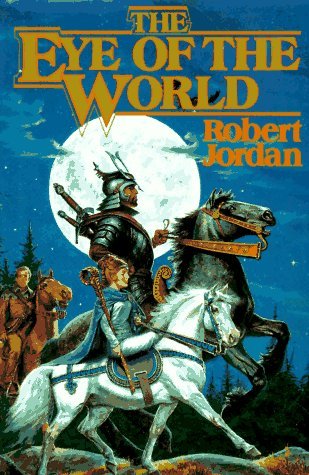
Alright, I figured I’d get the hulking elephant of the Readthrough out of the way first. “But Mountain,” you say “The Hugo nominees were only announced a week and a half ago! How could you have read all of the Wheel of Time?” Thanks for asking, imaginary reader! Well, to answer your question, I actually started rereading the series a few days before the nominees were announced, because I was predicting it would be on the ballot, and even I can only handle one behemoth fantasy novel per day. (It was one of two predictions for the shortlist I got right, the other being Ancillary Justice.)

First Time/Reread: Reread
Acquired: Owned

Other Nominees:
Ann Leckie: Ancillary Justice
Charles Stross: Neptune’s Brood
Larry Correia: Warbound, Book III of the Grimnoir Chronicles
Mira Grant: Parasite

(more…)

Hugo Nominees Announced!

Here’s the full list of nominees, and there are also Retro Hugo nominations this year. I’m planning on doing a read-through of all the novel nominations (at least for the regular ones, haven’t decided about the retro hugo nominees. Notable nominees: The ENTIRE Wheel of Time series. All of it. All 12,529 pages of it. …Luckily, I prepared for this eventuality, and have already started rereading it. I’m on book 8 of 15, though I still have to read both WoT short stories as well.

(more…)

Eponymous Laws of Science Fiction

Authors have a tendency to construct laws and rules of writing, both to help themselves while writing and to share with others. Here are a few of my favorites, ranging from the serious to the silly:

Frederick Pohl’s Basic Maxim #1:

“Writers write mostly for the fun of it. Agents exist to see they get money for having fun.”

Sir Arthur C. Clarke’s Three Laws

When a distinguished but elderly scientist states that something is possible, he is almost certainly right. When he states that something is impossible, he is very probably wrong.
The only way of discovering the limits of the possible is to venture a little way past them into the impossible.
Any sufficiently advanced technology is indistinguishable from magic.

A few of Larry Niven’s (Many) Laws

Never throw shit at an armed man.
Never stand next to someone who is throwing shit at an armed man.
There is no cause so right that one cannot find a fool following it.

Brandon Sanderson’s Laws of Magic

An author’s ability to solve conflict with magic is DIRECTLY PROPORTIONAL to how well the reader understands said magic.
Limitations > Powers
Expand what you already have before you add something new.

Sturgeon’s Law

Ninety percent of everything is crud.

Scalzi’s Law

Any conversation on the internet will eventually include bacon in some way. And then be forwarded immediately to John Scalzi.

For a big, huge list of eponymous laws, here’s the wikipedia page.